During Monday’s debate, incumbent Prosecutor Erika Oliphant made a very bold, very specific claim about her handling of the high-profile 2020 Vauhxx Booker case. When addressing her removal from the case, she confidently stated:
“I did not petition for a special prosecutor in that case. I in fact filed criminal charges in that case and signed them. However, the defense attorney did file a 7 page petition for a special prosecutor and that is ultimately how that got disposed. It did go to a special prosecutor.”
Well, we did our research and are absolutely amazed at the audacity of Prosecutor Oliphant to boldly spin the PR on this.
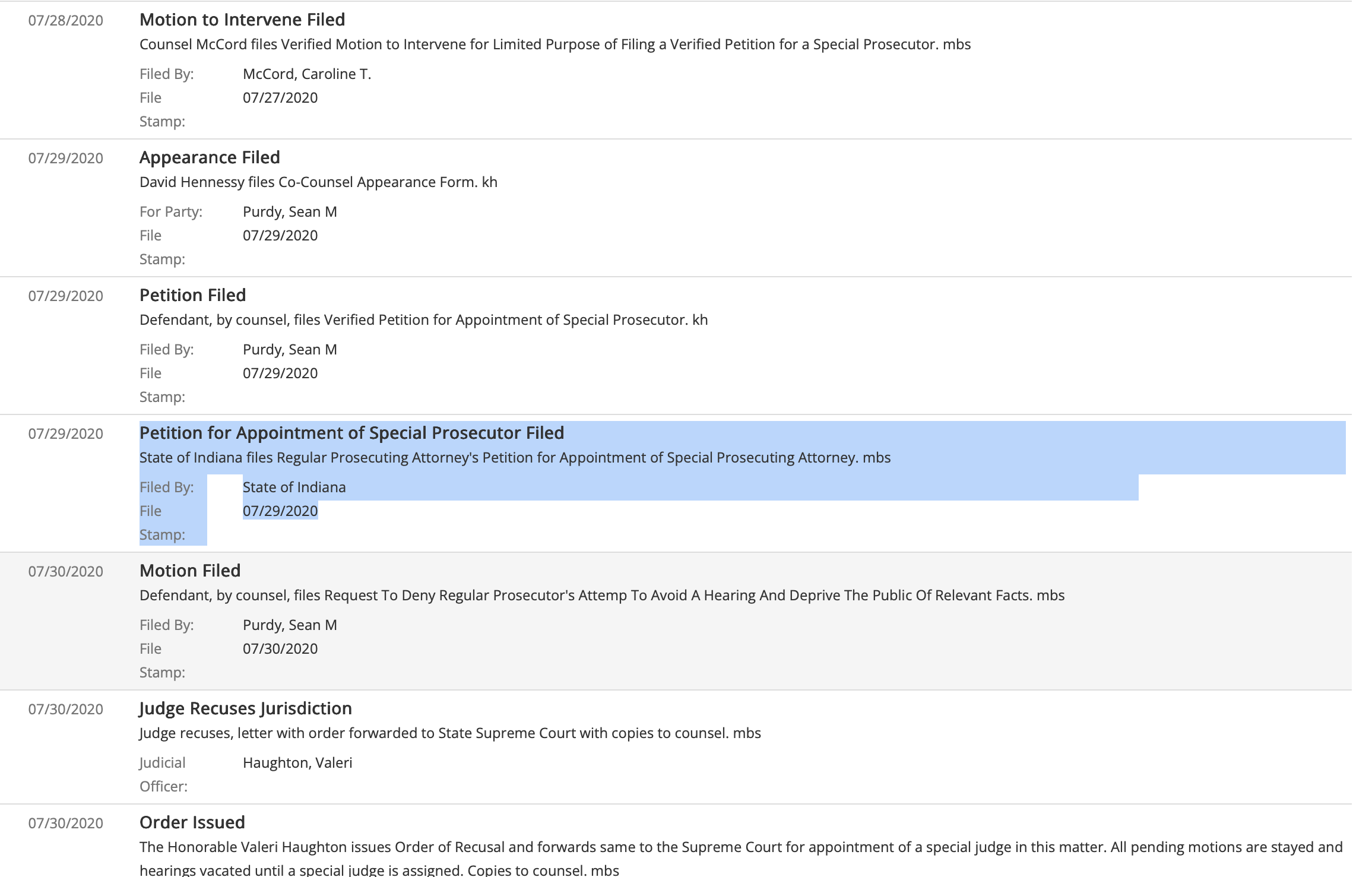
If you look at the official court docket from July 29, 2020, the truth is right there in black and white. While the defense did file a petition for a special prosecutor, the very next line item clearly shows that the State of Indiana filed the “Regular Prosecuting Attorney’s Petition for Appointment of Special Prosecuting Attorney.” She absolutely did petition to step down, directly contradicting her own definitive statement on the debate stage.
To understand why she is trying to rewrite history, you have to break down what she was actually running away from.
The defense’s petition demanded a special prosecutor largely based on a $150 campaign contribution made to Oliphant’s campaign by Katharine Liell, who was serving as Booker’s attorney at the time. The defense explicitly requested a public evidentiary hearing to scrutinize this alleged political bias.
Under Indiana Code 33-39-10-2, forcing a prosecutor off a case requires “clear and convincing evidence” of an “actual conflict of interest.” A routine $150 donation from a local defense attorney does not even come close to meeting that threshold. Precedent from both the Indiana Supreme Court and the U.S. Supreme Court routinely acknowledges that because judges and prosecutors are elected, standard campaign contributions from local attorneys do not automatically mandate recusal.
If Prosecutor Oliphant had actually opposed the request of the defense, she almost certainly would have won in court. So why did she voluntarily step down the exact same day the petition was filed? Because fighting it meant facing that public evidentiary hearing. It meant she and her deputies would have to sit under oath and answer tough questions about their internal investigation and initial charging decisions in front of the entire county. She chose to recuse herself to dodge accountability.
It is one thing to make a political decision to avoid a difficult public hearing. It is a completely different, heavily disingenuous claim to stand on a debate stage years later and confidently deny petitioning for a special prosecutor when the court docket proves otherwise. For an elected prosecutor to take such a hard, aggressive stance in total contrast to the verifiable facts is extremely problematic from an ethical point of view.
Op-Ed by Kevin Goodman
Leave a Reply