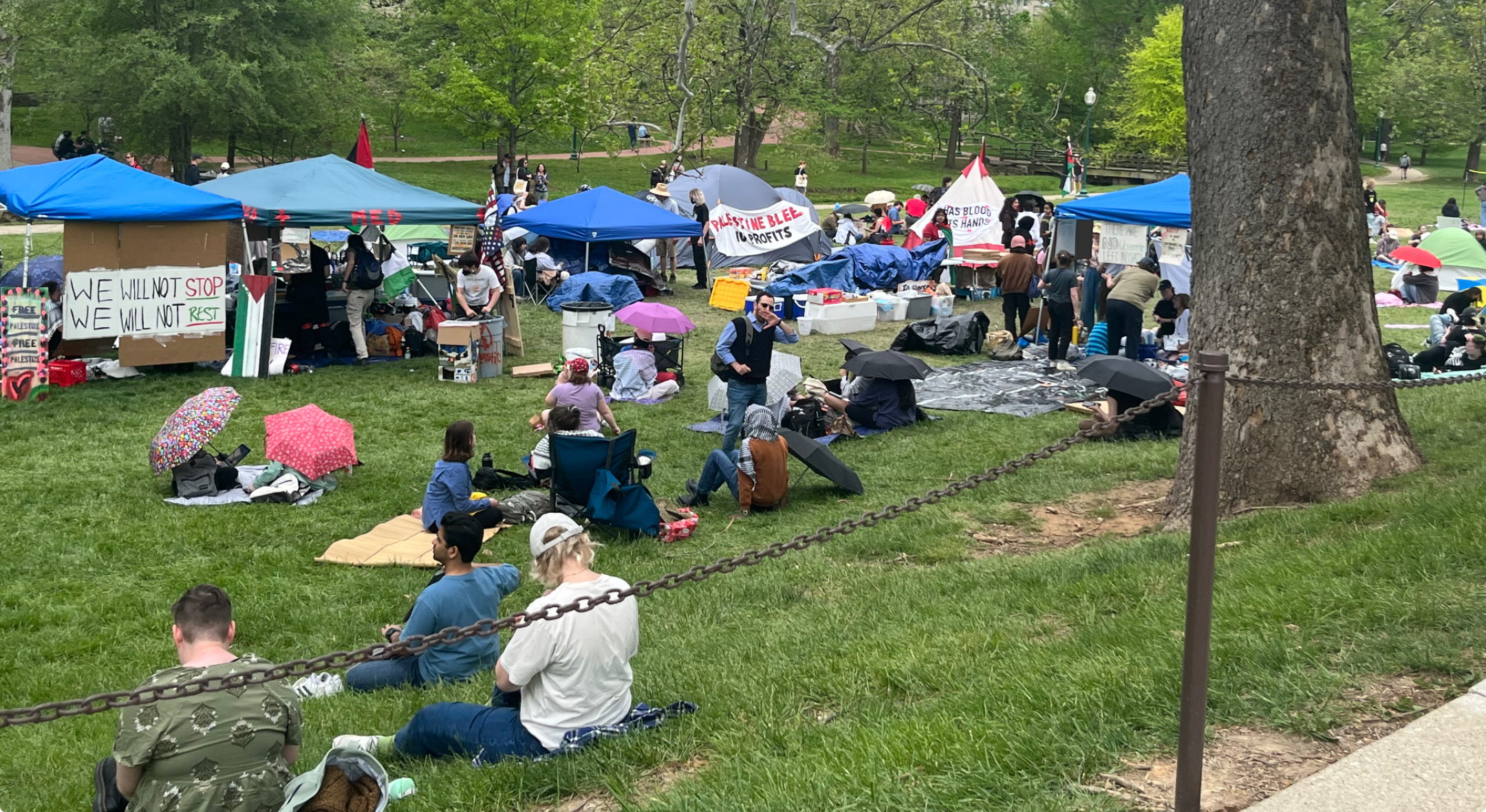
In late April 2024, the situation at Indiana University’s Dunn Meadow became a national flashpoint. On the eve of a planned pro-Palestinian encampment, university administration abruptly altered a decades-old policy, explicitly banning temporary structures like tents without prior approval. When protesters defied this sudden rule change, the Indiana State Police and university police were deployed. Over two days, law enforcement officers arrested 56 demonstrators for criminal trespass.
Monroe County Prosecutor Erika Oliphant ultimately chose to drop the criminal trespass charges against these demonstrators. For this decision, she deserves commendation. Dismissing charges when constitutional rights and sudden policy shifts are involved is the correct legal call. However, a deeper look into the mechanics of the criminal justice system reveals that the prosecutor’s office is still culpable for the chaotic sequence of events that unfolded on campus.
To understand why, the public needs to understand how local law enforcement actually operates. By Indiana statute, the county prosecutor is the chief law enforcement officer of the judicial circuit. This is a powerful legal mandate. The statute even grants deputy prosecutors and prosecutor’s investigators formal police powers. The prosecutor holds the absolute authority to decide whether or not to bring criminal charges.
If a prosecutor declines to file charges, the legal case simply does not exist. Therefore, making an arrest that will never be prosecuted is an unnecessary waste of taxpayer money and police resources. It is also deeply taxing, both psychologically and emotionally, for the arresting officers and the individuals being put in handcuffs.
Because of this dynamic, it is standard practice for law enforcement to consult the prosecutor’s office before making arrests, especially in complex situations where immediate public safety is not at risk. This is exactly why the prosecutor has a deputy on call 24 hours a day, 7 days a week. Police rely on this legal guidance to ensure their actions will hold up in court. Given this standard operating procedure, it is highly unlikely that the prosecutor’s office was not consulted prior to the state police moving into Dunn Meadow.
Following the dismissals, Indiana State Police Superintendent Doug Carter publicly scolded Prosecutor Oliphant, claiming she caved to political pressure. While the prosecutor has framed this criticism as a badge of honor, the reality is likely different. If the state police consulted her office and were not given clear guidance to stand down, or if the guidance changed after the arrests were already made, Superintendent Carter has every right to be frustrated. The prosecutor’s lack of preemptive clarity put state troopers in an untenable predicament.
Prosecutor Oliphant has publicly stated that she supports the right to protest but avoids attending such events because she could be called as a witness in a trial. While that is technically true for her personally, it is an inadequate excuse for the office as a whole. As the chief law enforcement official, she could easily dispatch a representative to observe the protest. A staff investigator could assess firsthand whether the gathering remained peaceful and constitutional, providing the office with the ground truth needed to advise police in real time.
The resolution of the Dunn Meadow arrests was ultimately the correct legal outcome, but the process to get there was deeply flawed. We must expect our elected officials not just to clean up messes after the fact, but to provide the clear, decisive leadership required to prevent them in the first place. On issue after issue, Erika has refused to take a decisive stance, choosing instead to cater to the fear of the state-level Republican establishment.
The photograph of Dunn Meadow is under CC license by Talis Wx.
Leave a Reply